


Nozy: Random Live Video Chat
4.5521.00 Reviews
App Specs
- Version
- 1.7.1.1
- Updated On
- License
- Free
- Downloads
- 1,000,000+
- Developer
- Fepar Inc.
- Categories
- Social
- Platform
- Android, iOS
Screenshots
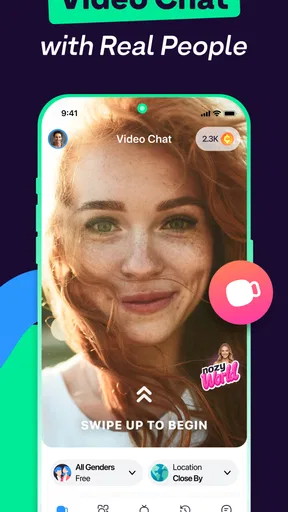
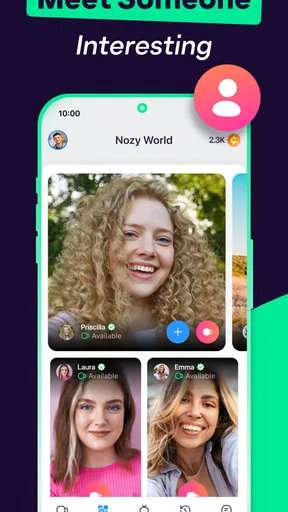
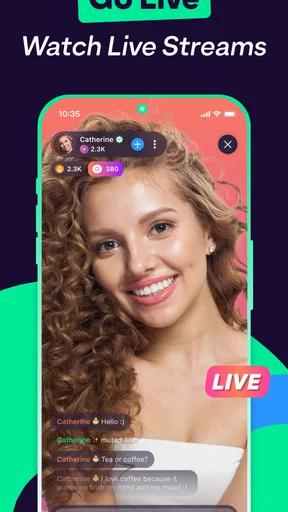
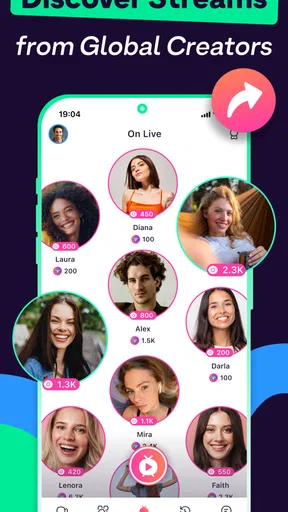
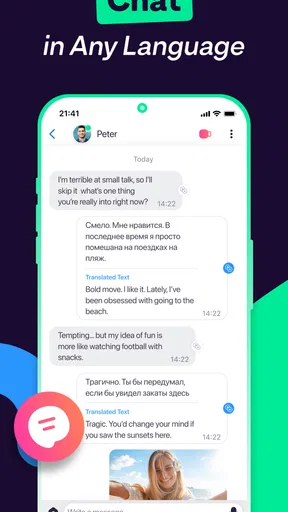
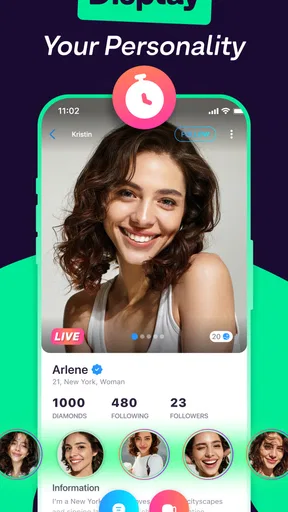
 Analysis by AppCompare
I approached Nozy as a social app built around one clear idea: meeting unfamiliar people through live video rather than waiting for an existing friend group to become active. That focus makes it more immediate than a normal messaging network, but it also makes the quality of each session depend heavily on who happens to be online and how comfortable you are with spontaneous conversations. In my experience, the appeal is not a large profile page or a carefully edited feed. It is the quick transition from opening the app to seeing whether a real conversation develops.
Developed by Fepar Inc., Nozy sits in the social category and is available free of charge. Its store summary points to live chat with random people, live streams, conversations with strangers, and going live, so I see it less as a replacement for a traditional messenger and more as a place for unplanned, real-time interaction. The app is rated for mature users aged seventeen and over, which is an important part of deciding whether it belongs on your phone or in your household.
The app has reached over a million installs and holds a 4.5 average from around eleven thousand ratings. Those figures suggest that it has found an audience beyond a small experiment, although they do not guarantee that every time of day will offer the same experience. Nozy is currently listed at version 1.7.1.1, works on Android 6.0 and later, and includes optional purchases ranging from $0.99 to $134.99 per item. I would keep that purchase range in mind before handing the phone to a younger user or treating the app as completely cost-free.
Why random live video is the heart of Nozy
I find random live video compelling because it makes the person, not a profile or feed, the starting point. That immediacy can turn a spare moment into a conversation, but it also means that attention and a steady connection matter more than they do when I’m simply browsing. The next section looks at what that shift means in practice.
The capability changes the pace of social discovery
The defining capability here is the chance to communicate with people you do not already know through live video. That changes the social rhythm considerably. On a conventional social network, I usually browse posts, inspect a profile, and decide whether to send a message. Nozy puts less distance between curiosity and conversation. The person on the other side is present now, so the interaction feels more like entering a room than composing a letter.
That immediacy can be useful when I want a short break from routine. A few minutes of live conversation may feel more human than scrolling through polished updates, especially when I am not looking for a long-term community or a carefully managed online identity. It also creates a small challenge: I cannot rely on a profile to tell me whether the exchange will be interesting. I have to make a quick judgment from the opening moments.
This is where Nozy differs from the usual alternatives. A messaging app is generally strongest when I already know the other person. A social feed rewards browsing and reacting. A livestream platform usually puts one broadcaster at the center while viewers watch. Nozy’s random live-chat angle is more direct and more unpredictable: the point is the encounter itself. That is a genuine strength for people who want novelty, but it is not automatically better for users who prefer control, continuity, or a familiar audience.
Worth Reading Before You Choose

EA SPORTS FC Mobile 26 Is a Bigger Football Game, but It Takes Time

Flipboard Shows What News Apps Must Do Beyond the Feed

Switching to Android Auto Means Rethinking Your Driving Routine

Google Calendar Makes a Crowded Week Easier to Manage

Ludo King Makes the Most of the Minutes Between Plans

Baby Panda World Brings Quick Play to Modern Phones, but Its Game Library Feels Busy
Live video offers context that text cannot
Video gives a conversation more context than a short message. Facial expression, timing, tone, and pauses can make it easier to understand whether someone is joking, shy, distracted, or genuinely interested. I found that this can help a conversation become natural faster than exchanging a series of empty greetings. At the same time, video raises the emotional stakes. A person who is comfortable typing may feel exposed when a camera is involved, and a stranger may make assumptions from what appears in the frame.
For that reason, I would treat the camera as a choice rather than an obligation. Before starting, I would check what is visible behind me, remove anything identifying from the background, and avoid showing documents, school materials, work screens, or details that reveal where I live. This is not a criticism unique to Nozy; it is simply the practical cost of using live video with strangers. The more spontaneous the connection, the more important it is to decide what remains private.
The mature rating matters in everyday use
Nozy is marked Mature 17+, and I would take that seriously rather than treating it as a minor label. Random live interaction can produce conversations that are awkward, unsuitable, or simply more intense than expected. The app may appeal to adults looking for casual social contact, but I would not recommend it as a general-purpose app for children or younger teenagers. Parents should also consider that a free download with optional purchases can still lead to spending if the phone is shared.
My practical rule would be simple: use the app only when I can leave a conversation immediately, avoid moving to another service too quickly, and never share a phone number, address, workplace, school, financial information, or private images with someone I have just met. If a conversation becomes pressuring or uncomfortable, the value of the interaction disappears. The ability to meet someone new is useful only when I remain in control of the exchange.
How a session feels from opening to conversation
A session’s opening moments can set the tone, so I think it helps to approach Nozy with a little intention rather than expecting every match to click. A neutral first question and a private camera setting give me a better basis for deciding whether to continue. From there, the most useful question is when this kind of unscheduled interaction fits naturally into a day.
Starting with the right expectations
I would not open Nozy expecting every connection to become a meaningful friendship. The random format is closer to sampling conversations than joining a stable group. Some encounters may end almost immediately, while others may find a shared topic by accident. That unevenness is not a technical flaw by itself; it is the trade-off created by removing the usual filtering process.
A better approach is to begin with a small goal. I might spend a short break looking for one pleasant conversation, practice speaking with people from different backgrounds, or simply see whether live social contact improves a dull evening. Having a modest expectation makes the quick exits less frustrating. If I expect a perfect match every time, the app can feel chaotic. If I expect occasional connection among plenty of ordinary moments, the design makes more sense.
A useful workflow for better conversations
One of the most practical habits is to prepare two or three neutral opening topics before going live. I would choose subjects that do not reveal personal information, such as music, food, travel ideas, films, hobbies, or what someone is doing during a quiet moment. This sounds basic, but it avoids the repeated “hi” exchange that often causes random chats to stall. A specific but safe question gives the other person something easy to answer.
I would also keep the first exchange short until the tone is clear. Rather than immediately discussing relationships, money, location, or personal problems, I would test whether the other person respects ordinary boundaries. Do they let me finish a sentence? Do they accept a change of topic? Do they react normally when I decline to share something? These small signals tell me more than a polished introduction would.
Another useful tactic is to treat the camera frame as part of the conversation. Good lighting and a quiet space can make it easier to hear and understand each other, but I would avoid turning the session into a performance. I do not need a perfect background. I need a private enough setting where I can end the chat without accidentally exposing information about my home, workplace, or daily routine.
What to do when a chat goes nowhere
Random video chat works best when I accept that leaving is normal. If there is no shared language, the sound is poor, the other person is distracted, or the conversation feels uncomfortable, I would end it rather than trying to rescue it. The ability to move on is part of the format, not a sign that the app has failed.
This is also why Nozy may feel less satisfying than a community-based service for someone seeking continuity. A group built around a hobby gives me common ground before I speak. A conventional messenger gives me a known contact. Nozy gives me possibility, but not necessarily context. I gain spontaneity and lose predictability.
Going live versus meeting someone at random
The option to go live changes the role I play. Instead of waiting for an encounter, I can become the person other users discover. That may suit someone who enjoys talking, performing casually, or answering questions in real time. It can also be more demanding than one-to-one chat because I have to manage the atmosphere rather than simply respond to it.
I would approach going live with the same privacy discipline as random video conversations. A distinctive background, a uniform, a visible name badge, or a repeated schedule can reveal more about me than intended. I would avoid mentioning where I am at that moment and would keep the subject matter within boundaries I can maintain consistently. The live format rewards confidence, but confidence should not mean oversharing.
The everyday situation where Nozy makes the most sense
Nozy makes the most sense when I have a quiet pocket of time and want conversation without arranging it in advance. That can be a pleasant alternative to scrolling, provided I can give a live exchange my attention and end it comfortably. Looking at that scenario also clarifies why the same app may be a poor fit during busy, public, or easily interrupted moments.
A short social break without arranging plans
The strongest scenario for me is an adult with a little free time who wants real-time interaction without organizing a group chat or making plans in advance. Imagine finishing work earlier than expected, sitting somewhere private, and wanting conversation rather than another silent scroll. Nozy can fill that gap because the starting point is immediate. I do not need to persuade friends to come online or wait for replies to a message.
In that situation, I would use a brief session as a social reset. I would open with a safe question, see whether the other person responds respectfully, and leave if the exchange feels forced. The benefit is not necessarily finding a lifelong friend. It is the chance to have a small, human moment during an otherwise empty part of the day.
The app may also appeal to people who enjoy practicing casual conversation. Someone learning to speak more confidently could use short exchanges to get comfortable with introductions and follow-up questions. I would not treat random video chat as a substitute for a structured language course, but the live pressure can reveal which topics are easy to discuss and which responses need practice. The key is to avoid giving away personal details simply to keep a conversation alive.
When a different kind of social app is better
I would choose a traditional messaging app when I need dependable contact with friends, family, or colleagues. I would choose a community platform when I want detailed discussion around a specific interest. I would choose a conventional livestream service when I prefer watching one creator rather than speaking directly with unfamiliar individuals. Nozy is the better fit only when the unknown element is part of the appeal.
It is also not the right choice for someone who dislikes being on camera, needs strong control over who can contact them, or wants conversations that continue naturally from one day to the next. The app’s central capability is precisely what creates those limitations. Random live video can make socializing feel fresh, but it cannot promise the comfort of an established network.
The trade-offs behind spontaneous connection
The spontaneity that makes Nozy distinctive also limits how much control I have over the other person, the pace, and the quality of a chat. I see that as a real trade-off, not a flaw that can be fixed by simply trying harder. It helps to weigh that uncertainty against what I actually want from a social app before deciding whether to use it.
Free access does not mean a completely cost-free experience
Nozy is free to download and use, which lowers the barrier to trying it. However, optional in-app purchases are listed from $0.99 to $134.99 per item. I would review any purchase prompt carefully and set device-level spending controls if another person can access the account. A broad purchase range does not make the app bad, but it means I would not describe the experience as financially risk-free without qualification.
I would also avoid buying anything simply because a conversation was disappointing. Random matching naturally produces uneven sessions, and spending does not change the basic fact that another person’s interest, manners, and availability are outside my control. The sensible test is whether the free experience already suits my habits before I consider optional extras.
Privacy and emotional energy require active management
The biggest nontechnical trade-off is privacy. Live video reveals more than text, and strangers can ask direct questions very quickly. I would use a neutral username, keep identifying objects out of view, and avoid switching to private contact channels during the first conversation. I would also remember that a friendly tone is not proof that someone is trustworthy.
There is an emotional trade-off too. A sequence of abrupt endings can feel personal even when it is simply part of random matching. I would use the app in short sessions and stop when the experience starts to feel tiring or intrusive. The goal is casual connection, not an obligation to keep entertaining someone or to prove that a conversation deserves more time.
Version and device considerations
The current version is 1.7.1.1, and the minimum operating system is Android 6.0. That makes the app accessible to people using older Android devices, although the quality of a live video experience still depends on the phone’s camera, microphone, connection, and overall condition. I would test it in a quiet place before judging the service based on one poor call. If the device struggles with camera apps generally, Nozy may feel frustrating even when the social idea is appealing.
Because live interaction is sensitive to interruptions, I would also avoid starting a session while driving, walking through an unfamiliar area, or handling work that requires concentration. A spontaneous conversation is not worth losing awareness of the surroundings. This is a small but important difference from browsing a feed: live video demands attention from both sides.
Who gets the most from Nozy
I think Nozy is best for mature users who enjoy brief, unplanned conversations and can protect their privacy while remaining flexible. Someone seeking familiar contacts, topic-focused discussion, or a predictable text-first experience will likely be happier elsewhere. The final consideration is whether the app’s particular kind of openness matches the way you want to connect.
Best suited to curious, socially flexible adults
I think Nozy is most useful for adults who enjoy meeting unfamiliar people, can handle quick changes in conversation, and are comfortable deciding when to leave. It rewards curiosity more than careful planning. If I like hearing different viewpoints, starting conversations from nothing, and accepting that some attempts will be forgettable, the format can be entertaining and occasionally rewarding.
It may also suit someone who wants a low-commitment way to be social. There is no need to maintain a public feed or build a large contact list before getting value from the app. A single good exchange can be enough for one session. That makes it different from networks where the reward comes only after I invest time in a profile, followers, or ongoing groups.
Who should skip it
I would skip Nozy if I am looking for a tightly moderated, interest-specific community, a professional networking tool, or a private messenger for people I already know. I would also avoid it if I am under the mature age rating, uncomfortable with live camera interaction, or likely to share personal information when pressured. The random format is not a weakness to overcome for those users; it is a sign that the app serves a different purpose.
People who become discouraged by rejection or abrupt endings should start cautiously. I would use it for a limited period, keep expectations modest, and stop if the interaction affects my mood. A social app should add a little energy to the day, not create a new source of stress.
My recommendation after weighing the experience
My view is that Nozy has a clear identity because it commits to live discovery instead of trying to be every kind of social network at once. The random video capability can make a quiet moment more interactive, and going live gives confident users another way to participate. Its strongest use is a short, voluntary conversation with someone new, not a replacement for trusted relationships or structured communities.
I would recommend trying it if you are a mature user who understands the privacy trade-off and genuinely likes spontaneous interaction. I would keep sessions short at first, prepare safe opening topics, protect the background of the camera, and treat every conversation as optional. If you want reliable contacts, predictable subjects, or a calmer text-first experience, a conventional alternative will probably serve you better.
For the right person, Nozy is valuable precisely because it removes some of the planning from socializing. For the wrong person, that same lack of control can become its biggest frustration. I would judge it by one question: do you want to discover who is available right now, or do you already know the kind of person and conversation you need? If the first answer feels more appealing, this free social app from Fepar Inc. is worth exploring carefully.
Pros
- Quickly connects you with new people through random live video chats.
- Simple interface makes starting a conversation fast and easy.
- Useful for practicing languages with users from different countries.
- Video interactions feel more personal than text-only social apps.
- Offers spontaneous conversations without requiring a detailed profile.
Cons
- Random matching can lead to awkward
- repetitive
- or uninteresting conversations.
- You may encounter inappropriate behavior or unsuitable content.
- Privacy risks exist when sharing your face or personal information on camera.
- The experience depends heavily on having a stable internet connection.
- Some features or extended usage may require in-app purchases.
FAQs for Nozy: Random Live Video Chat
What is Nozy: Random Live Video Chat, and how does it work?
Nozy is a social video-chat application designed to connect users with people they may not know through random live conversations. After creating or entering a profile, you can typically start a video session, meet another available user, and continue chatting or move on to someone else. The experience is spontaneous, so the quality of conversations depends on who is online and how actively users participate.
Is Nozy: Random Live Video Chat free to download and use?
Nozy can generally be downloaded without an upfront purchase, but some features may depend on in-app purchases, credits, subscriptions, or other limitations imposed by the current version of the service. Before using paid options, check the app’s store listing and payment screen carefully. Prices, trial terms, renewal conditions, and available features can vary by country, device, and future updates.
Is Nozy safe for teenagers and younger users?
Random video-chat platforms require particular caution because conversations involve strangers and content may not always be predictable. Parents should check Nozy’s age rating, privacy policy, reporting tools, and account controls before allowing use. Never share a home address, school, phone number, passwords, financial information, or private photos. Users should immediately end suspicious conversations and report or block inappropriate behavior.
What privacy information does Nozy require, and can I control who contacts me?
The information required may include an account identifier, profile details, device permissions, and access to the camera and microphone for live conversations. Review the permissions requested during installation and disable anything unnecessary in your phone settings. Because random matching can expose you to unknown people, use the available skip, block, and report functions, and read Nozy’s privacy policy to understand how data and recordings are handled.
What should I do if I encounter harassment, inappropriate content, or technical problems?
If another user behaves abusively, displays inappropriate material, pressures you to share personal information, or makes you uncomfortable, leave the chat immediately and use Nozy’s block and report options. Do not continue arguing or move the conversation to another platform. For connection, camera, or microphone problems, check permissions, update the app, restart it, and contact the developer through the official support channel.


